

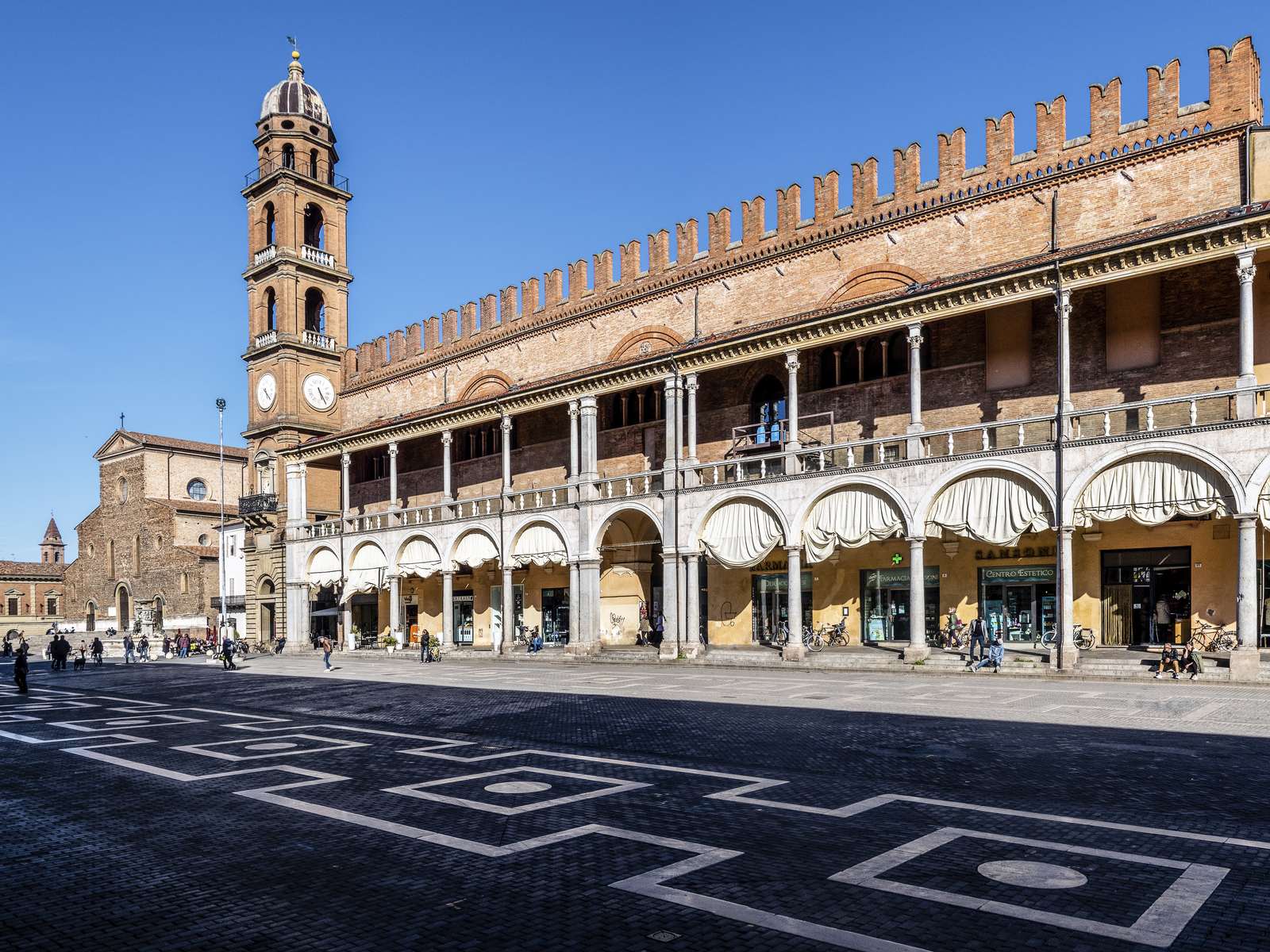
Faenza, distinguishing marks: the capital of ceramics
At Zampiera Vecchia we love telling you about the area around us, and Faenza is one of the places we always recommend from the heart. Across much of Europe, tin-glazed pottery goes by a name that sounds very familiar to us: faïence in French, Fayence in German, faience in English. They all come from the name of the town, a tribute to the skill of Faenza’s potters, who in the sixteenth and seventeenth centuries made their majolica so famous that the name Faenza became a byword for ceramics.
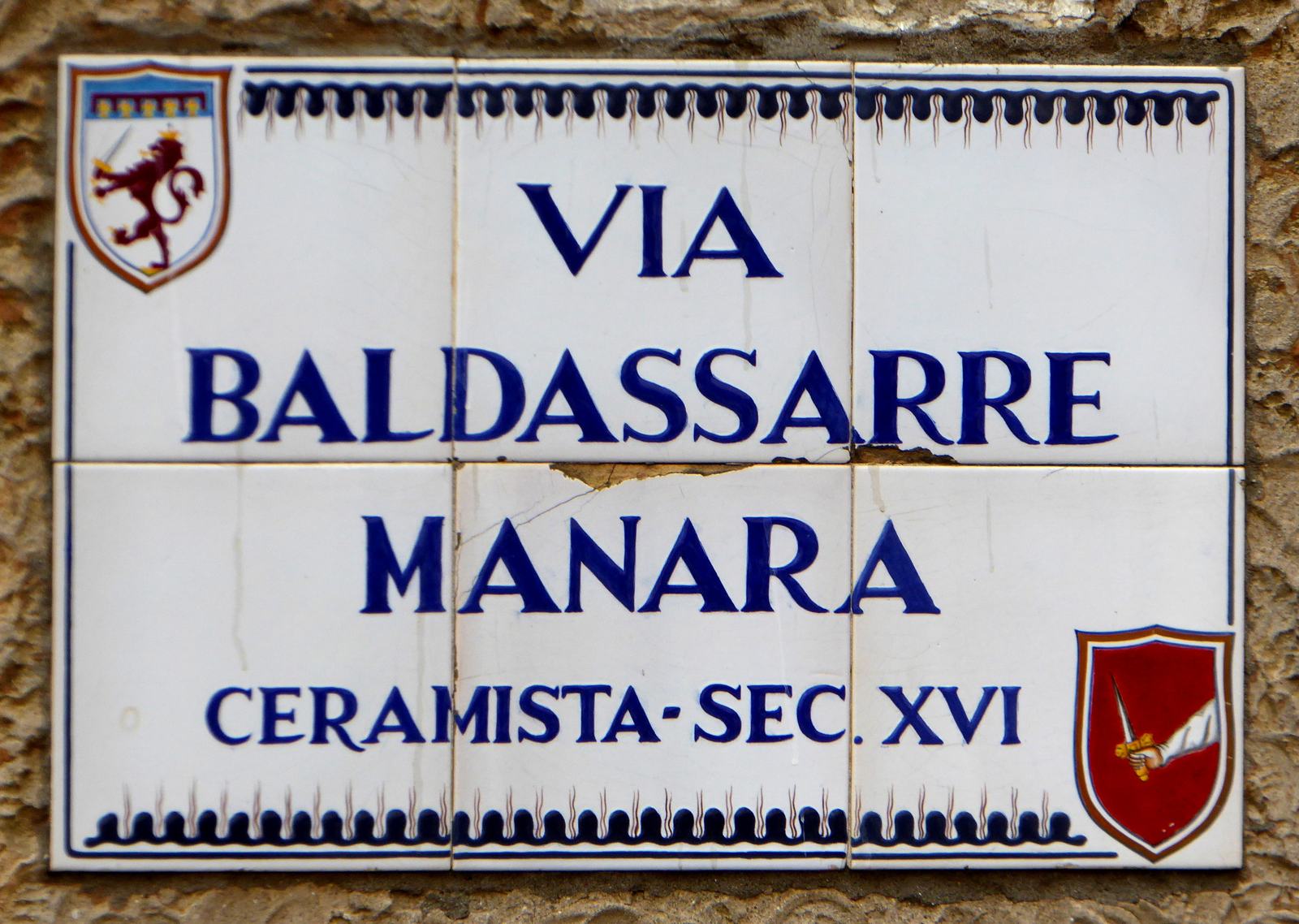
Faenza was already working clay in the Middle Ages, but it was around 1300 that its “archaic” majolica, decorated in green and brown, came into bloom: the first chapter of the craft that would make the town famous around the world, carried on for centuries in the workshops of the old town. Even today Faenza is so full of works of art that it feels like a museum without walls: not just plates and jugs, but devotional plaques, sculptures, architectural panels, façade cladding and street decorations that grace its streets and palazzi. In the historic centre even many of the street-name signs are made of painted majolica, and since 2025 Faenza has been a UNESCO Creative City for crafts and folk art. Here is what to see in Faenza, what to take home and what to taste.
What to see in Faenza at a glance
- Where it is: in Romagna, in the province of Ravenna, about half an hour’s drive from Podere Zampiera Vecchia and 11 to 20 minutes by train from Imola.
- Not to be missed: the MIC, the International Museum of Ceramics, Piazza del Popolo and Piazza della Libertà with the Monumental Fountain, the Teatro Masini and Palazzo Milzetti.
- How long you need: a full day; allow at least half a day for the MIC.
- What to take home: a piece of hand-painted majolica, ideally with the “Ceramica artistica e tradizionale di Faenza” (artistic and traditional Faenza ceramics) mark.
- At the table: cappelletti in broth, passatelli and tagliatelle with ragù, with a glass of Albana or Sangiovese.
- When to go: all year round; at the end of June there is the Niballo, the palio of the town’s five districts, and in even-numbered years, at the beginning of September, Argillà Italia, the great ceramics fair.
The International Museum of Ceramics: 60,000 works from all over the world
When you visit Faenza, our first tip is to set aside half a day for the MIC, the Museo Internazionale delle Ceramiche (International Museum of Ceramics). Founded in 1908 by Gaetano Ballardini, it is an extraordinary treasure chest and today describes itself as the most important collection in the world devoted to ceramics: more than 60,000 works spanning thousands of years of history, from 4000 BC to the present day, from the vases of classical Greece to Renaissance majolica and on to contemporary art. You can admire the famous “Bianchi di Faenza” (Faenza whites), born in the second half of the sixteenth century and known for their white glaze and their quick, pared-back decoration in the so-called “compendiario” (shorthand) style. You can meet the giants of modern art such as Picasso, Matisse and Chagall and take a trip around the globe with ceramics from the Far East, Iran, Egypt and Turkey, all the way to the pre-Columbian Americas, with the Maya, the Aztecs and the Inca.
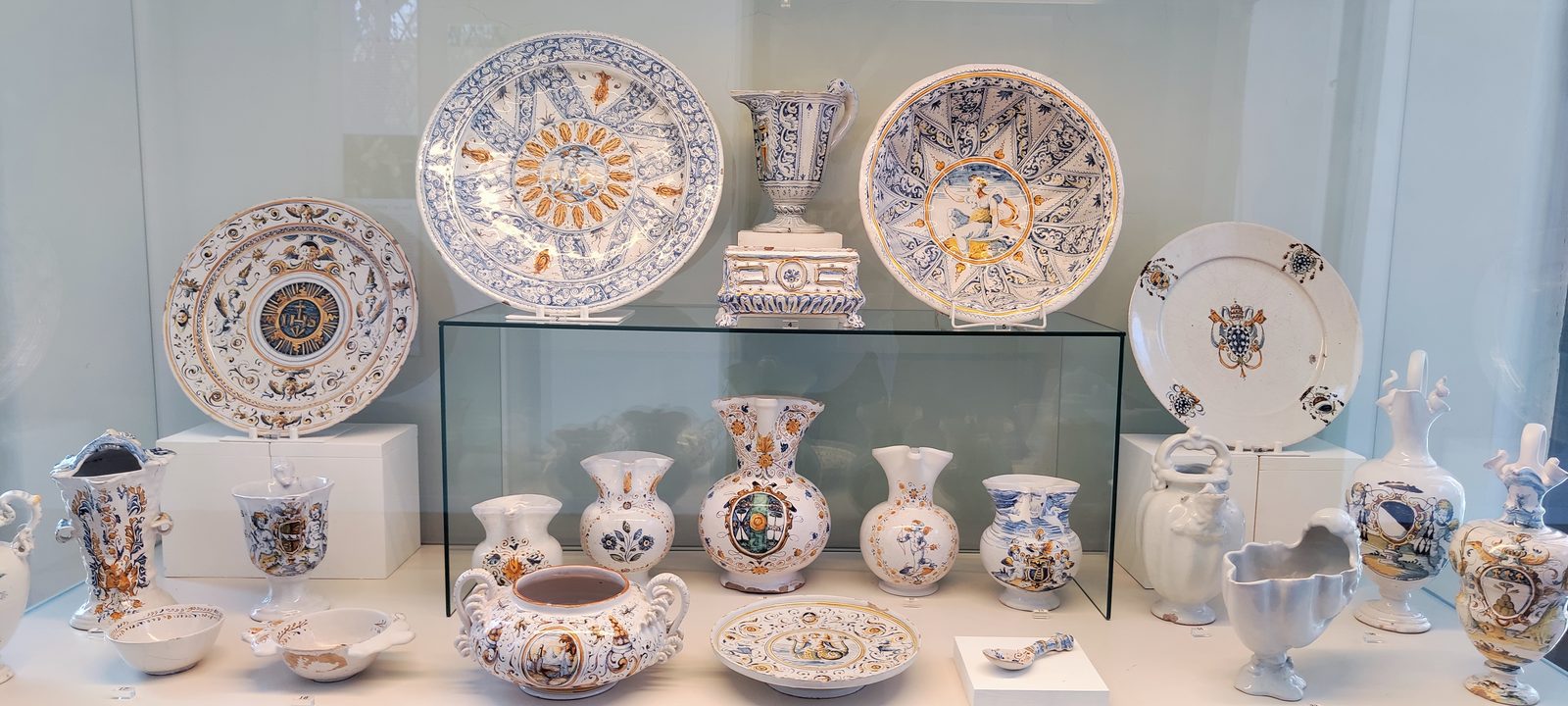
Practical information: the MIC is at Viale Baccarini 19, a five-minute walk from the railway station. From November to March it is open Tuesday to Friday from 10 am to 2 pm, and on Saturdays, Sundays and public holidays from 10 am to 6 pm; from April to October it is open Tuesday to Sunday from 10 am to 7 pm. It is closed on Mondays, except public holidays. In winter, then, it is best to spend your half day at the museum in the morning. Ticket prices change with the exhibitions on show and entry is free for children up to 14: up-to-date opening hours and prices are on the official MIC website.
Piazza del Popolo and Piazza della Libertà: Faenza’s drawing room
Need one more reason to visit Faenza? We will give you two: Piazza del Popolo and Piazza della Libertà, a monumental ensemble that has nothing to envy the great squares of Europe. Across Piazza del Popolo two medieval buildings face each other: the Palazzo del Podestà, from the twelfth century, and Palazzo Manfredi, once the residence of the town’s lords and now the town hall. What gives the square its noble look are the two elegant two-storey loggias, one opposite the other like the wings of a stage: the town hall loggia, begun in the fifteenth century and rebuilt in neoclassical style in 1859, and the Podestà loggia, added in 1760 precisely to mirror it. Together they create a harmonious open-air drawing room.
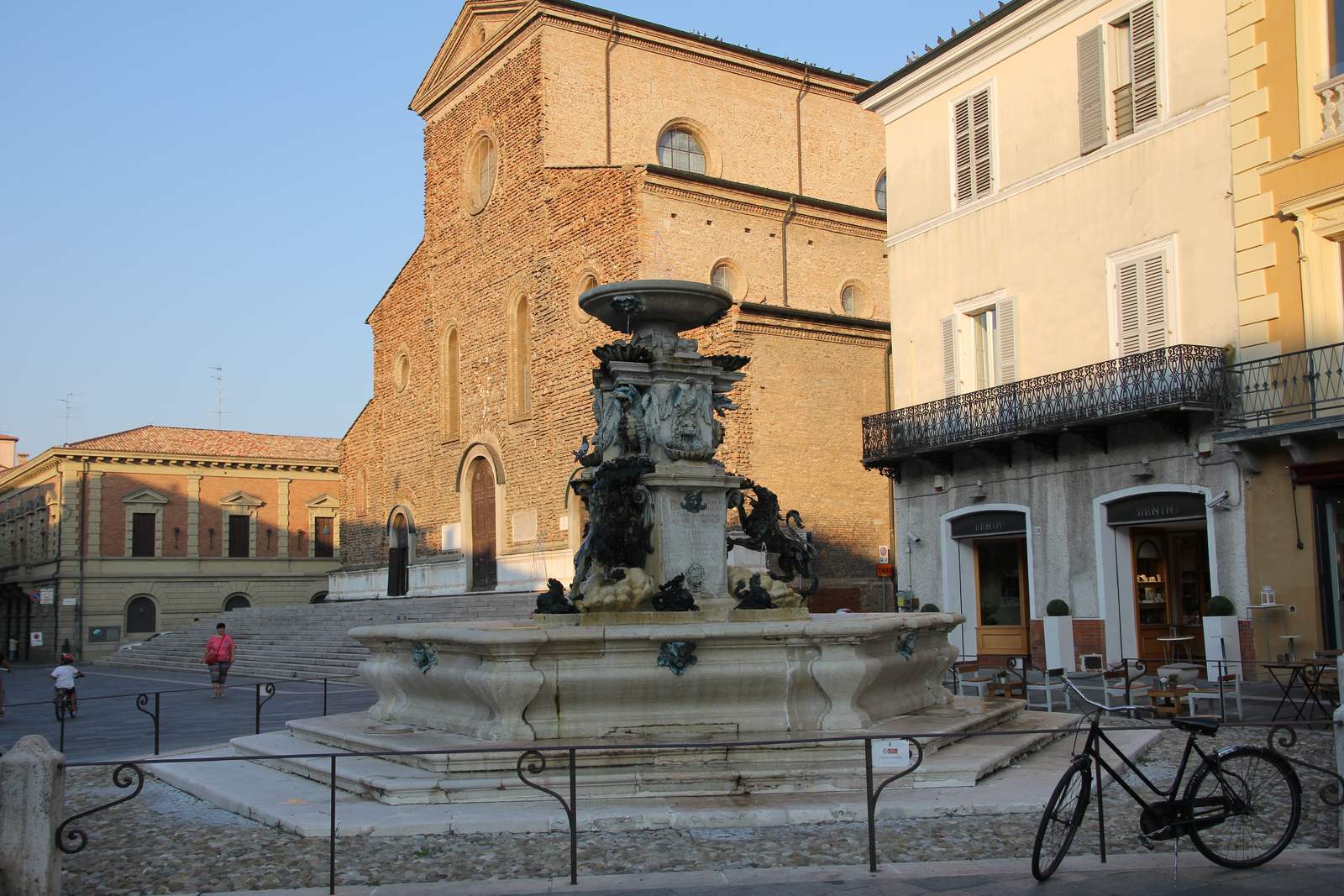
A few steps away, Piazza della Libertà is dominated by the Renaissance cathedral, with its brick façade that was never finished, and by the Torre dell’Orologio (clock tower). Next to the cathedral stands the Fontana monumentale (Monumental Fountain), completed in 1621 to a design by the architect Domenico Castelli: a gem of the early Baroque, with its water jets and its bronze lions, dragons and eagles cast by the Jacometti family of Recanati, which recall the coat of arms of the town and that of Pope Paul V. For four centuries it has been where the people of Faenza meet.
Beyond ceramics: the Teatro Masini and the hidden treasures of the old town
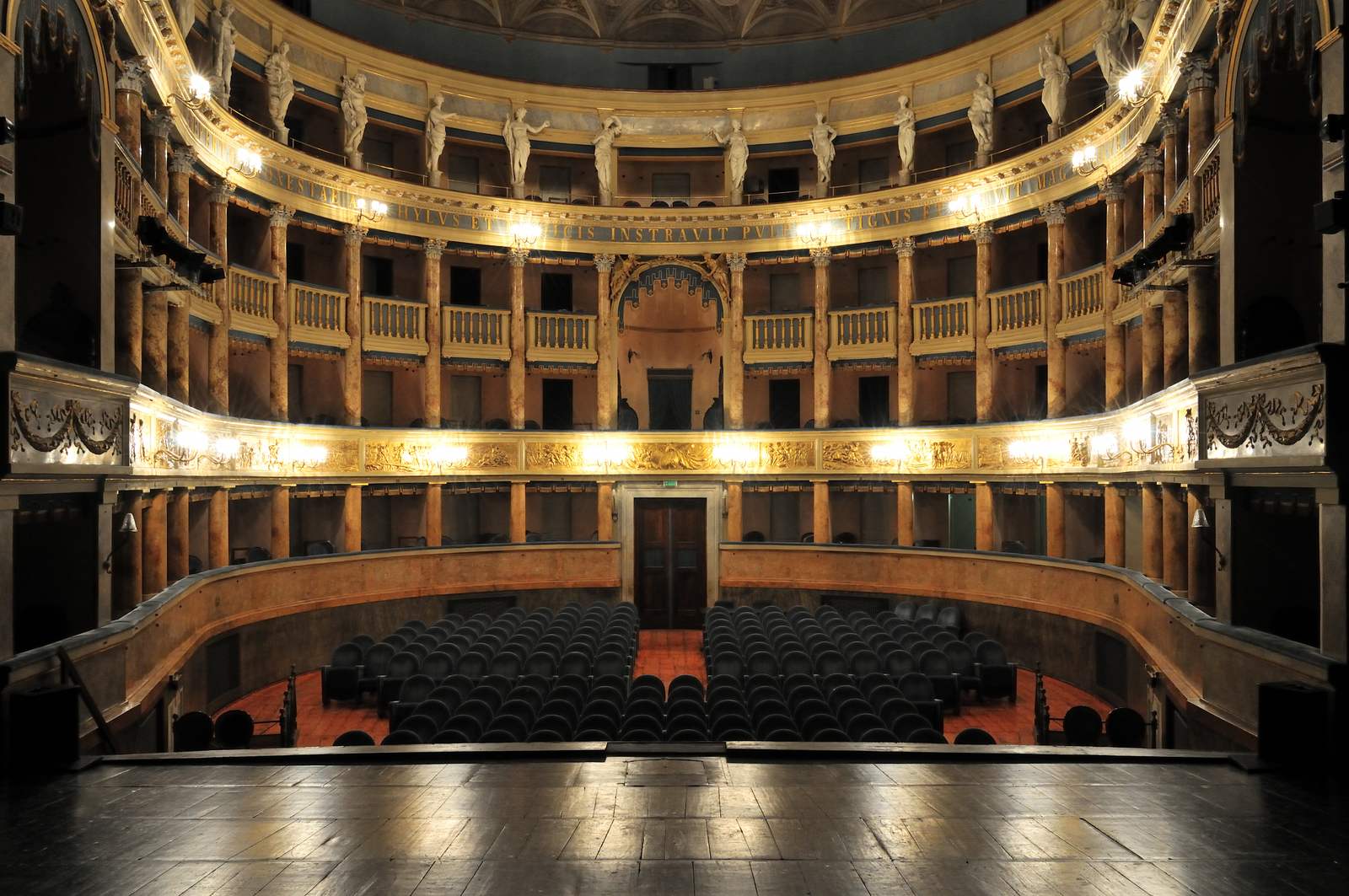
Just a stone’s throw from the square, in Piazza Nenni, you will find the Teatro Masini, built between 1780 and 1787 to a design by Giuseppe Pistocchi. It is a classic Italian-style theatre and one of the most representative examples of Neoclassicism in Italy, a true jewel box with a horseshoe-shaped auditorium, four tiers of boxes and statues of gods and Muses carved by Antonio Trentanove. You can visit it on Saturday mornings on a tour with the Pro Loco tourist association (times and information) or, even better, by buying a ticket for a show.
Carry on through the streets of the old town and you will come across three more treasures: Palazzo Milzetti, now the National Museum of the Neoclassical Age in Romagna, with rooms decorated by Felice Giani; the Pinacoteca Comunale (civic art gallery), which tells the story of art in Romagna from the Middle Ages to the twentieth century; and the Museo Carlo Zauli, housed in the very studio where the sculptor worked from 1949, among kilns, glazes and clay. For a guided tour of the Zauli museum it is best to book ahead (museum website).
What to buy in Faenza: the “Bianchi” and ceramic crafts to pack in your suitcase
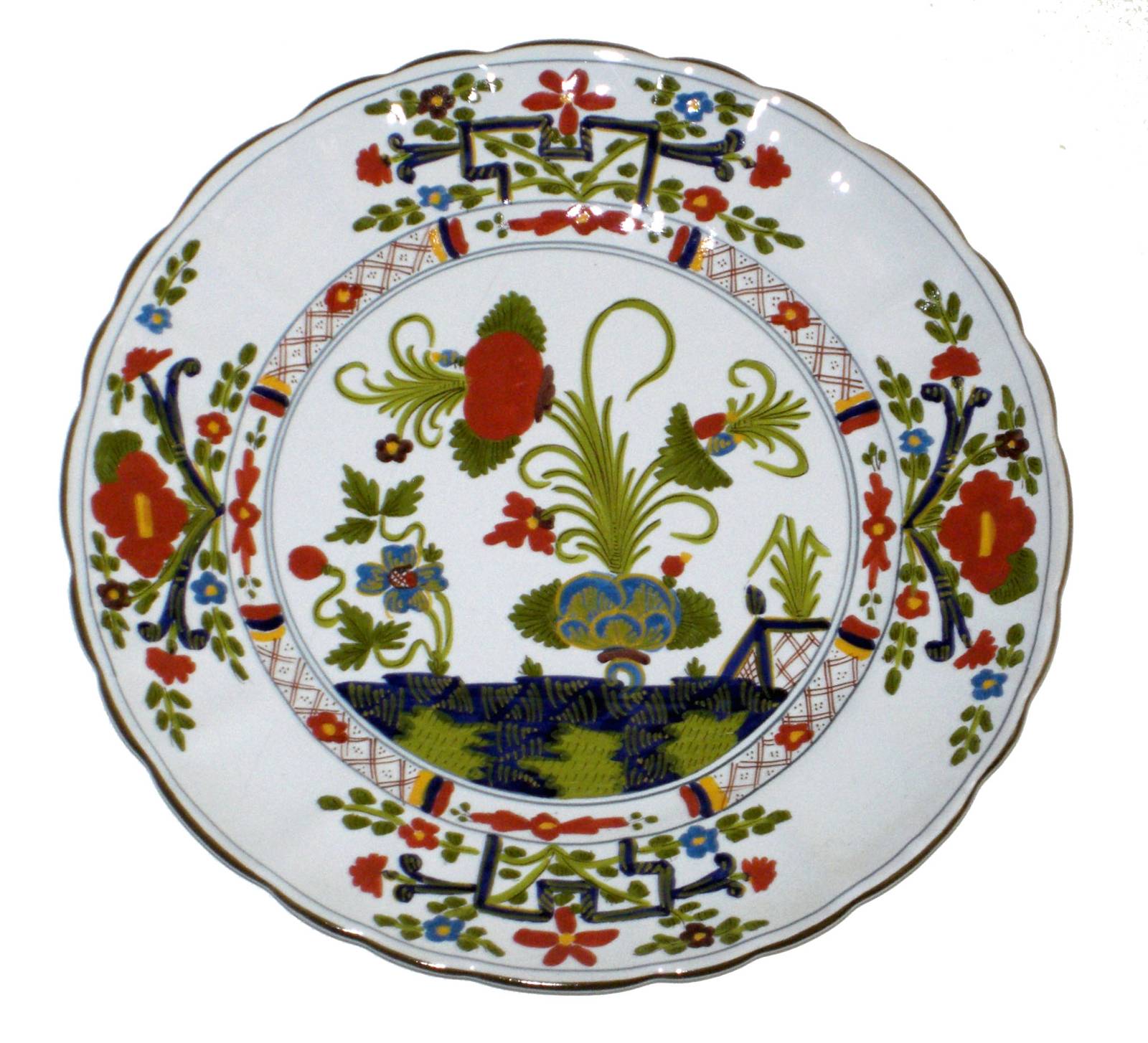
If you are wondering what the perfect souvenir would be, our best advice is a piece of hand-painted Faenza ceramics. You could go for the famous “Bianchi di Faenza”, true symbols of Faenza craftsmanship around the world, with their snow-white glaze and a few touches of blue, yellow and orange, or for one of the traditional patterns, such as the Persian palmette, which dates back to the fifteenth century, or the carnation, made famous in the eighteenth century by the Ferniani pottery. To be sure of where it comes from, look for the “Ceramica artistica e tradizionale di Faenza” mark, reserved for potters listed in the official register. If you are travelling light, you can opt instead for elegant ceramic jewellery and contemporary homeware, easy to carry in your luggage.
Faenza’s cuisine: from cappelletti to the wines of the hills, authentic flavours to savour
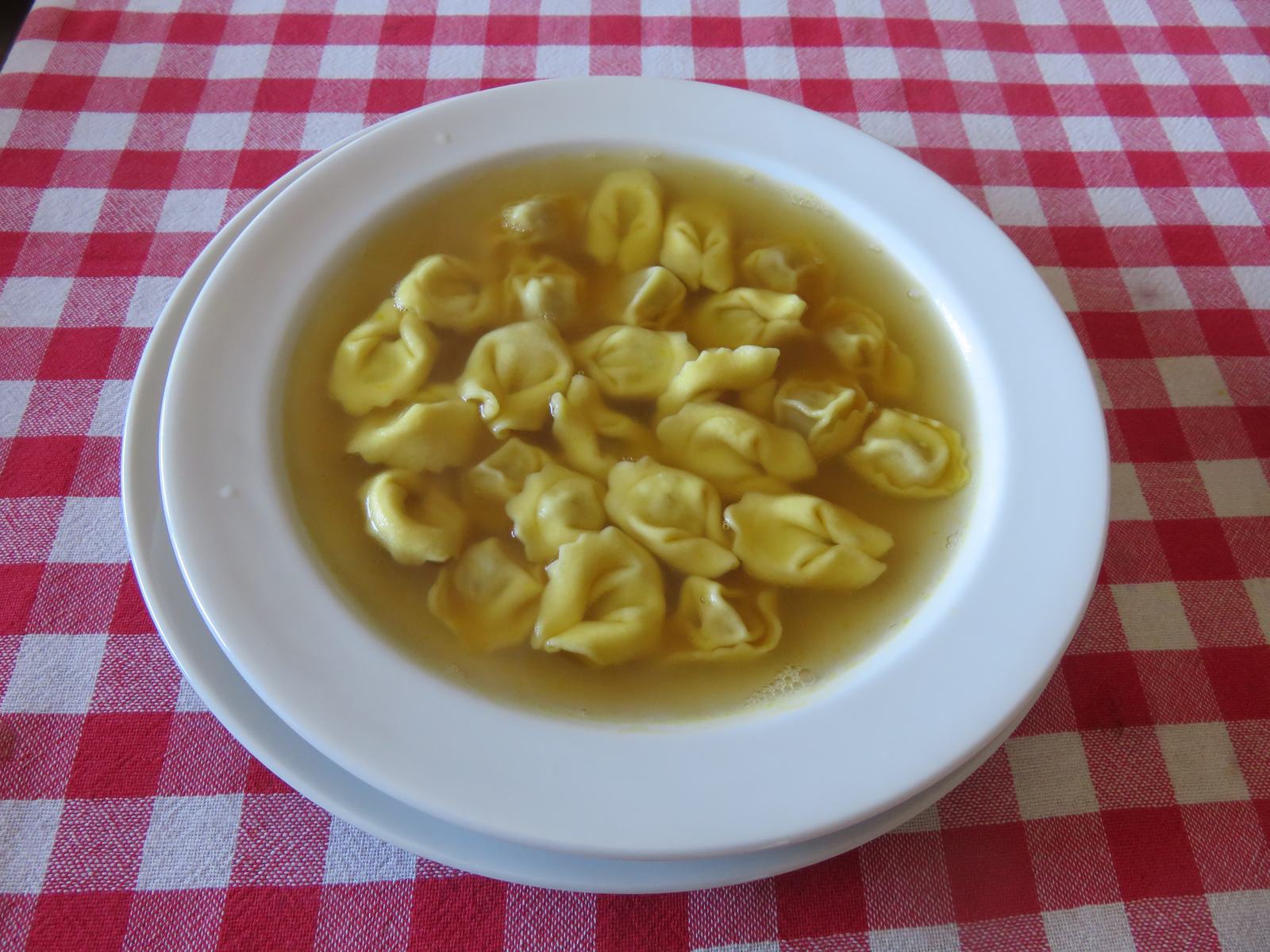
The real beauty of Faenza does not end with its monuments and craft workshops: it carries on at the table, where the best of Faenza’s cooking comes to life. It is another side of the town, one you taste as well as look at, made of recipes that change with every season and where the real secret lies in the quality of the ingredients. From the famous cappelletti in brodo (small filled pasta in broth) to passatelli (thick strands of breadcrumbs, egg and cheese) and tagliatelle al ragù, all the way to grilled meats, Faenza’s menu honours the Romagna tradition without giving up a little healthy experimentation. This is not a cuisine dictated by passing fashions, where the description of the dish promises more than the plate delivers: here, substance rules.
The best thing about eating in Faenza is that, whichever way you look at it, the food is always good: whether you choose a small historic osteria or an address recommended by the Michelin Guide, such as La Baita (Bib Gourmand), you can trust it with your eyes closed. And if you are looking for a Michelin star, San Domenico is right here in Imola: you will find it in our guide to the best restaurants in Imola.
In the glass, the great wines of the hills. Albana, the first Italian white wine to be awarded DOCG status, grows on the hills between Faenza and Imola, and Sangiovese is a grape whose name appears for the first time right here, in a notary’s deed of 1672 kept in the State Archives in Faenza. For the curious there is also Centesimino, a rare red that grows on the hills around Faenza, near Oriolo dei Fichi. Many Romagna wines can also be tasted at the Enoteca Regionale (regional wine library), inside the castle of the village of Dozza.
Staying near Imola to visit Faenza: come and see us at Podere Zampiera Vecchia

Are you already picturing your next getaway in Romagna and looking for the right base? Whether you are after the peace of an agriturismo (farm stay) in Imola, the homely feel of a bed and breakfast or the services of a hotel, here at Podere Zampiera Vecchia you will find the best of all three, in quiet, well-kept rooms. We are about half an hour’s drive from Faenza (just under 30 kilometres), surrounded by the tranquillity of the countryside at Cantalupo, just outside Imola: the perfect starting point for your trips to discover Faenza, Imola and all of our beautiful land. And if you prefer the train, it takes just 11 to 20 minutes from Imola station to Faenza.
If you would like to come and stay, get in touch to check availability through our Contacts page or on WhatsApp, and have a look at our special offers: we look forward to welcoming you with open arms!
Read also: the house museum of Palazzo Tozzoni in Imola, the story of the Imola circuit, what to see in Bologna in one day and all the things to see near Imola.
Photo credits: the images come from Wikimedia Commons. Piazza del Popolo, photo by Vanni Lazzari (CC BY-SA 4.0); Monumental Fountain, photo by Gianni Careddu (CC BY-SA 4.0); auditorium of the Teatro Masini, photo by Lorenzo Gaudenzi (CC BY-SA 4.0); plate with the carnation pattern, photo by Rosco (CC BY-SA 2.5); cappelletti in broth, stock photo by Lungoleno (CC BY-SA 4.0); display case of Bianchi di Faenza, International Museum of Ceramics (CC0); Via Manara street sign, photo by Aisano (CC0). The photos have been resized.


