

What to see in Bologna in one day: history, secrets and authentic flavours
Bologna is a city that spills over. It refuses to settle for a single description and has no fewer than three nicknames to tell its story: la Dotta, the Learned, for its thousand-year-old university; la Grassa, the Fat, for a food scene worth loosening your belt for; la Rossa, the Red, for the colour that dominates its rooftops and its porticoes.
Where Bologna lies and why its character is unique
To get a better sense of the air you breathe here, let’s start with where the city sits. Bologna occupies an enviable position, at the point where the Po Valley meets the first slopes of the Apennines. This strategic spot has always served as a hinge between northern and central Italy. That geography does not merely deliver striking views: it makes the city an unavoidable crossroads and a lively meeting point of cultures, which is where its people get the open, welcoming character they have always been known for.
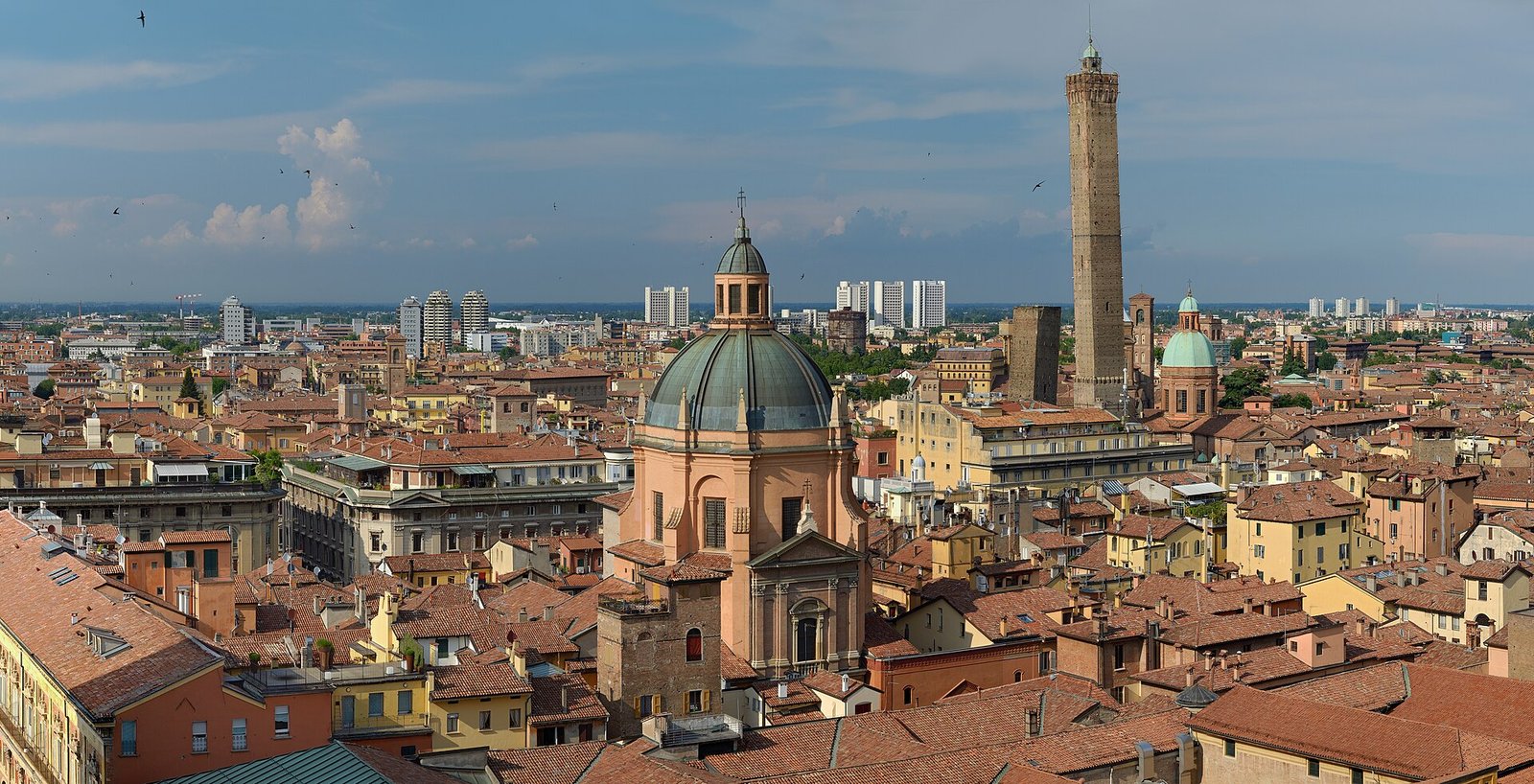
Now let’s begin our day discovering Bologna. It almost goes without saying that you will want comfortable clothes and comfortable shoes, because we will be doing the whole thing on foot. Bear in mind, too, that seeing the unmissable sights takes a full day.
Piazza Maggiore and the Basilica of San Petronio
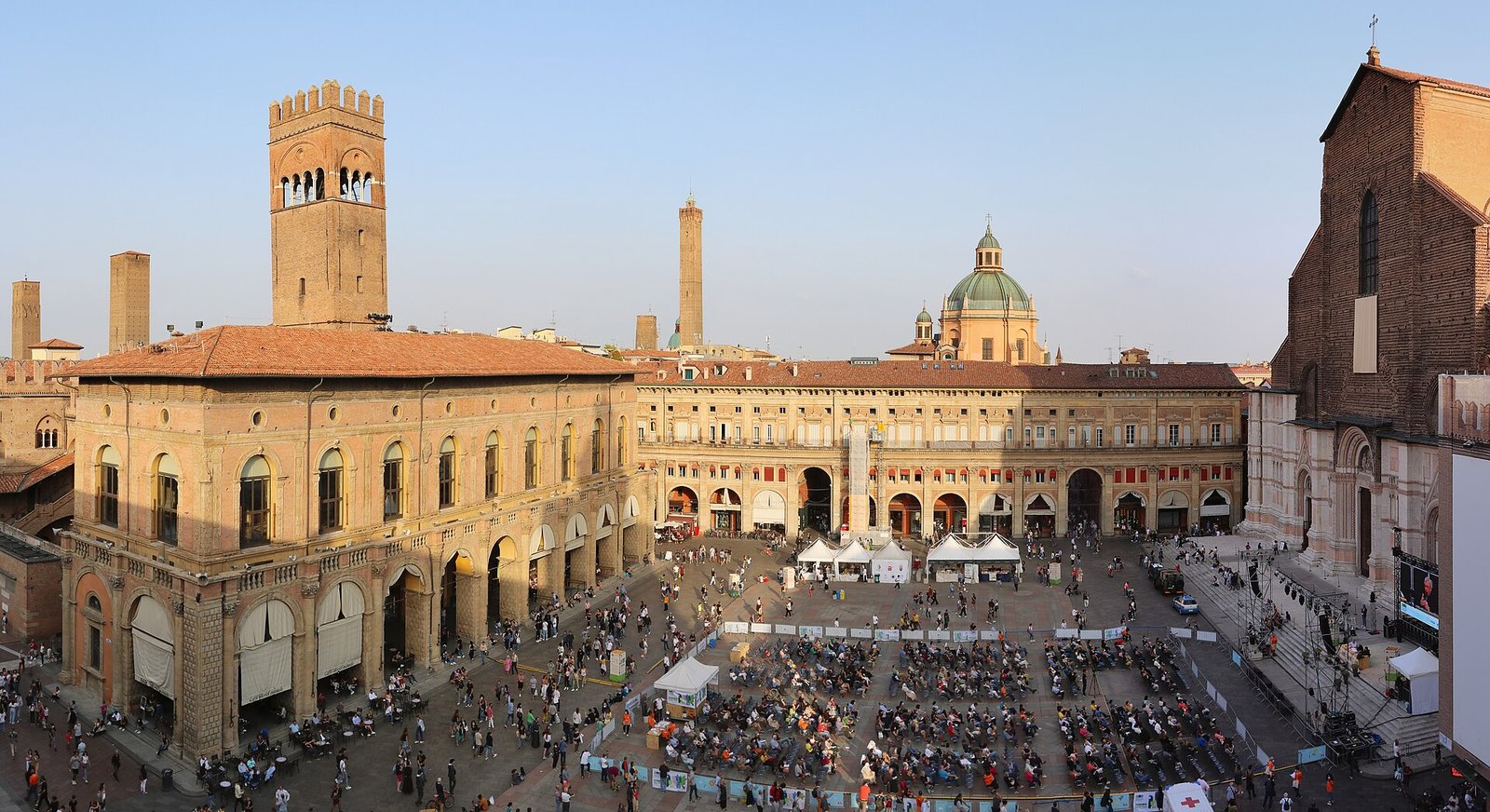
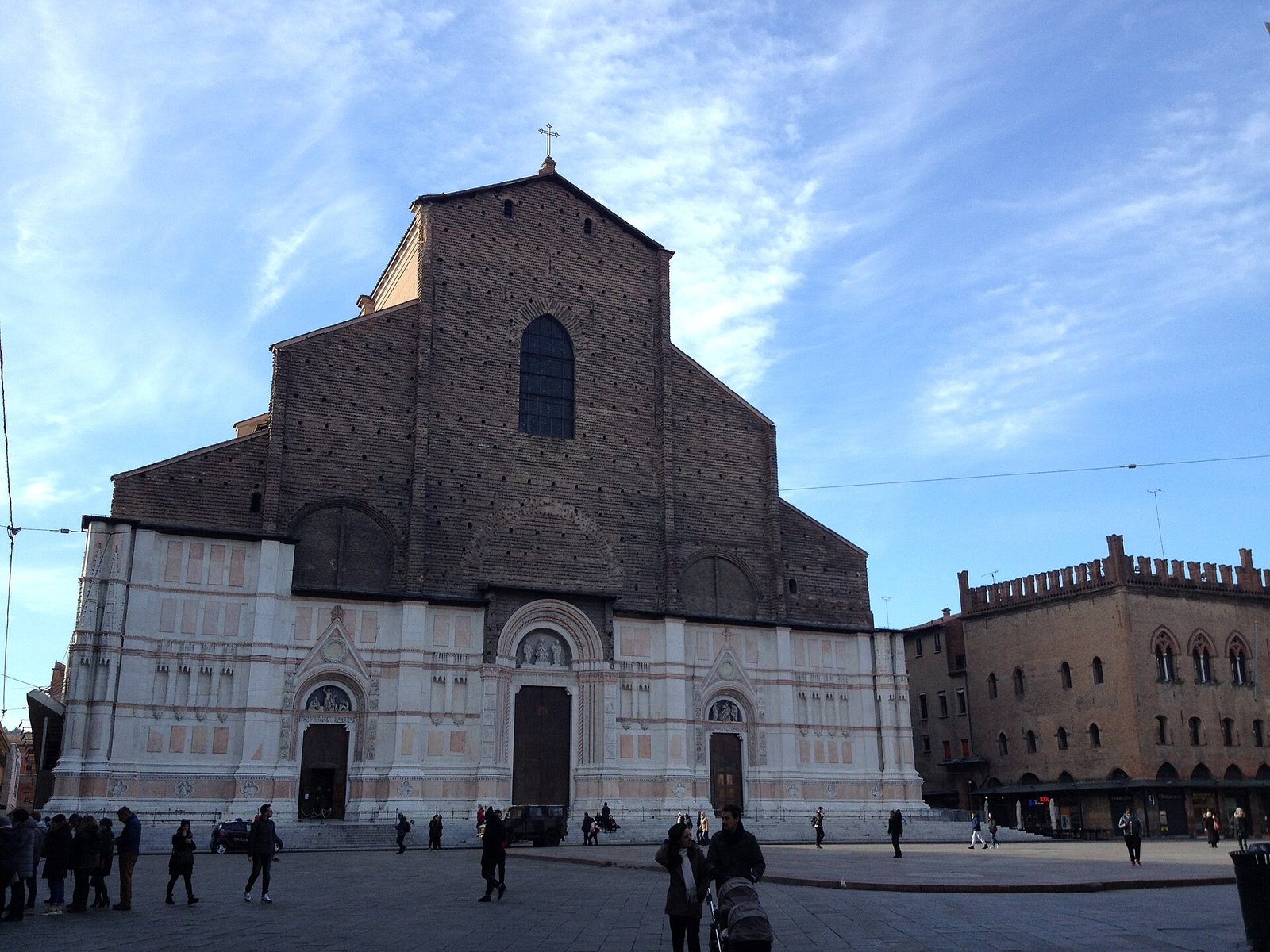
The heart of the city is Piazza Maggiore, Bologna’s drawing room: an immense space where life flows between the café tables and the constant rhythm of passers-by. On one side of the square stands the Basilica of San Petronio, dominating the scene with its imposing half-finished façade. It was a hugely ambitious project that political intrigue left unfinished, and that is precisely where its singular charm lies. Inside, the basilica is simple and linear, enriched by frescoes, high ceilings and stained glass windows. One detail of particular interest is the celebrated Cassini meridian line, the longest in the world, running for 67 metres across the marble floor.
The Neptune Fountain and the Two Towers
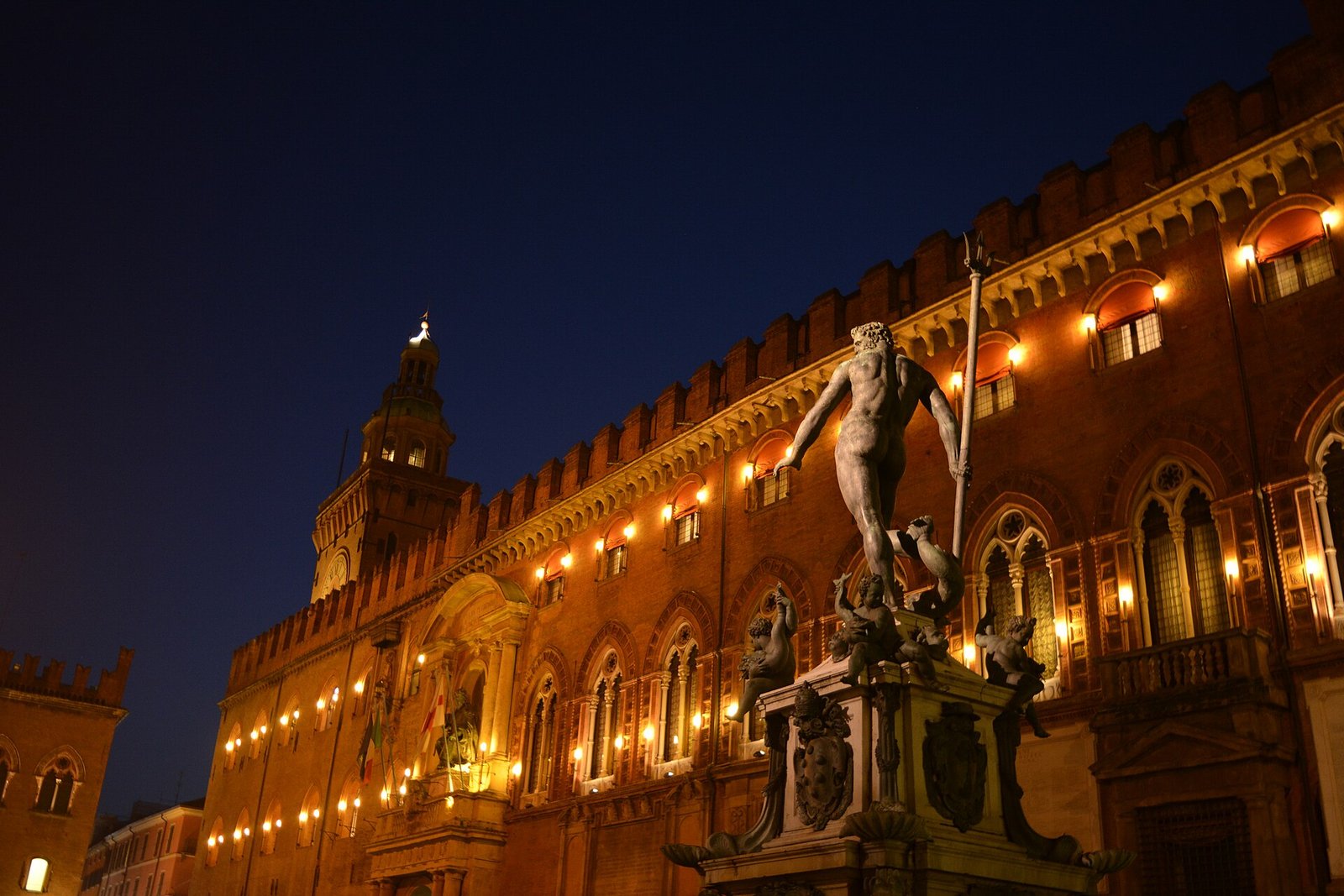
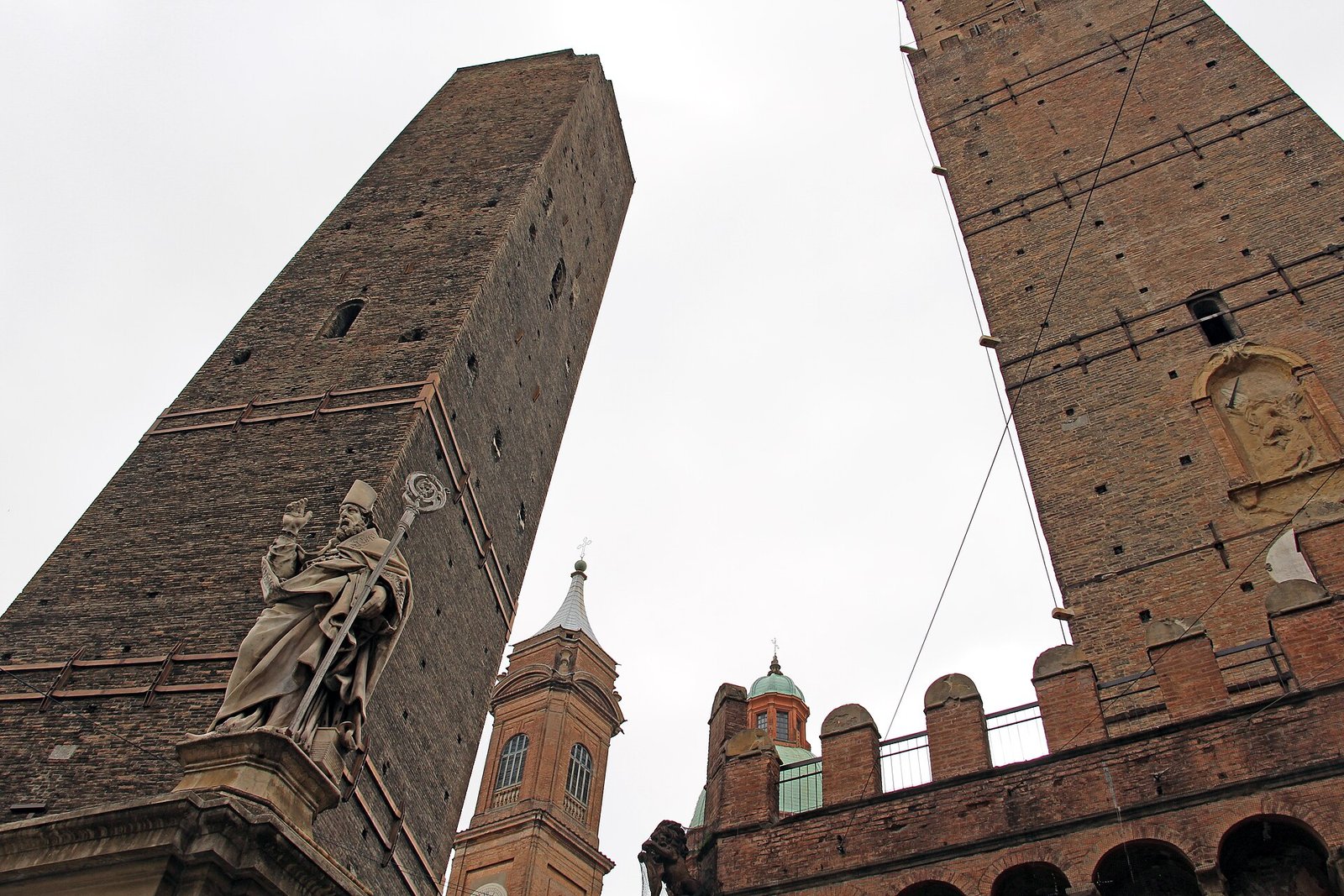
A few steps from the square, the majestic statue of Neptune, affectionately known to the people of Bologna as “il Gigante”, the Giant, presides over the centre of the fountain that bears his name, his grand bronze form modelled by Giambologna. Look up and it is impossible to miss the Two Towers, the Garisenda and the Asinelli, leaning at an almost provocative angle. At 48 and 97 metres tall, they remain one of the city’s undisputed symbols. To reach them, leave the squares behind and take Via Rizzoli, the main street that cuts through the centre: it is a short walk of around 400 metres to the foot of the towers.
Normally you can climb to the top of the Asinelli Tower and, after 498 steps, be rewarded with a breathtaking view that takes in the whole of the old town and stretches as far as the hills. For the moment, however, the climb is suspended while safety work is carried out on the Garisenda: before your visit it is worth checking for reopenings on the official Bologna Welcome channels. As an alternative, a fine panorama over the city awaits you from the Clock Tower, right on Piazza Maggiore.
Lunch in the historic osterie: welcome to “la Grassa”
To reward yourself for all that walking, it is time to honour Bologna’s second title: la Grassa. If you are ready, let’s head for the city’s historic osterie. Choosing is no easy task, given how many excellent options there are: among them Osteria dell’Orsa, where you can try handmade traditional dishes such as tagliatelle al ragù, lasagne and tortellini, or Osteria Bottega, for outstanding cured meats and carefully sourced ingredients.
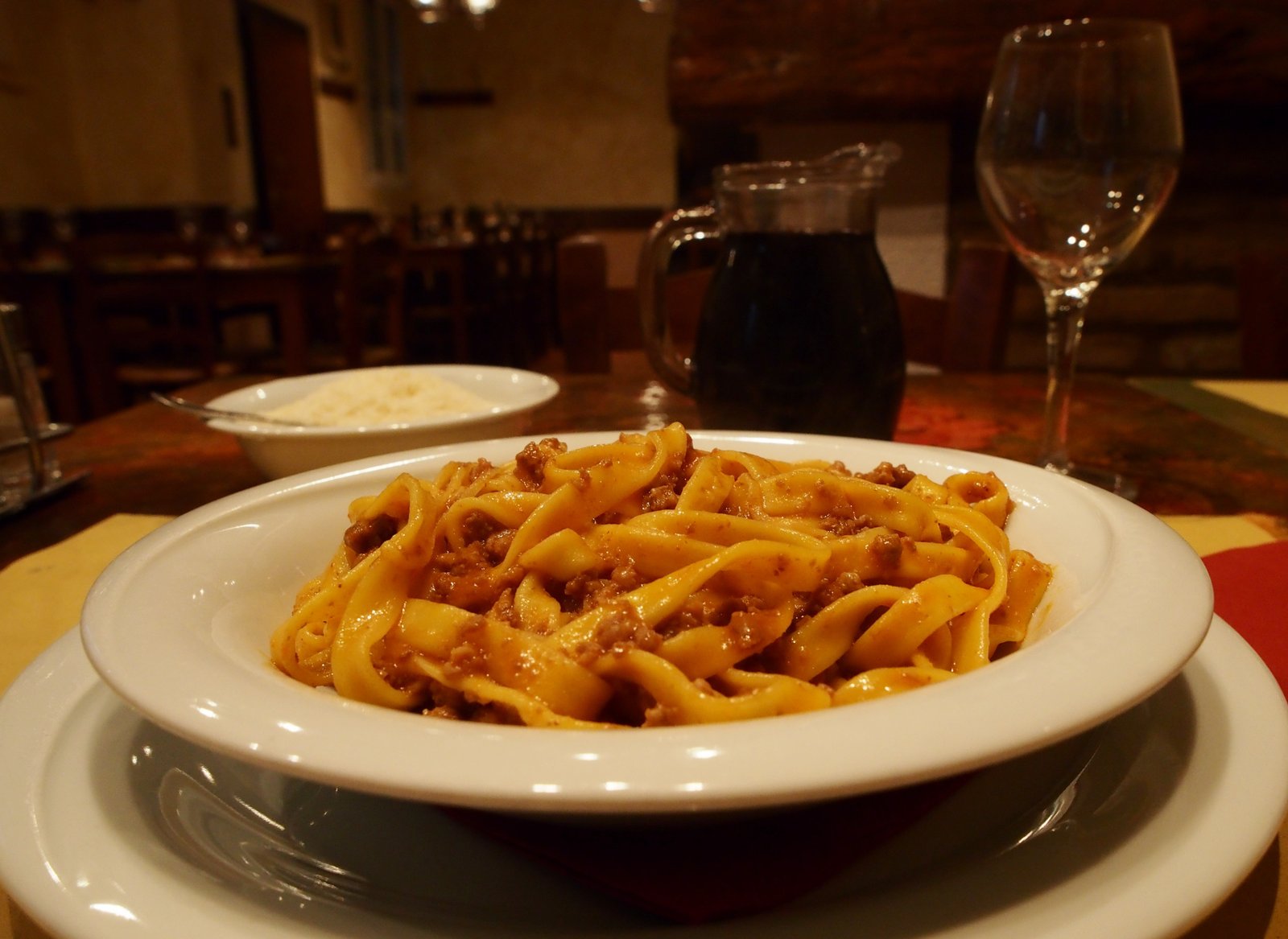
Having paid your respects to Bolognese cooking, there is time for a good coffee for anyone who fancies one, and then we are off again.
The little window on via Piella and Bologna’s Little Venice
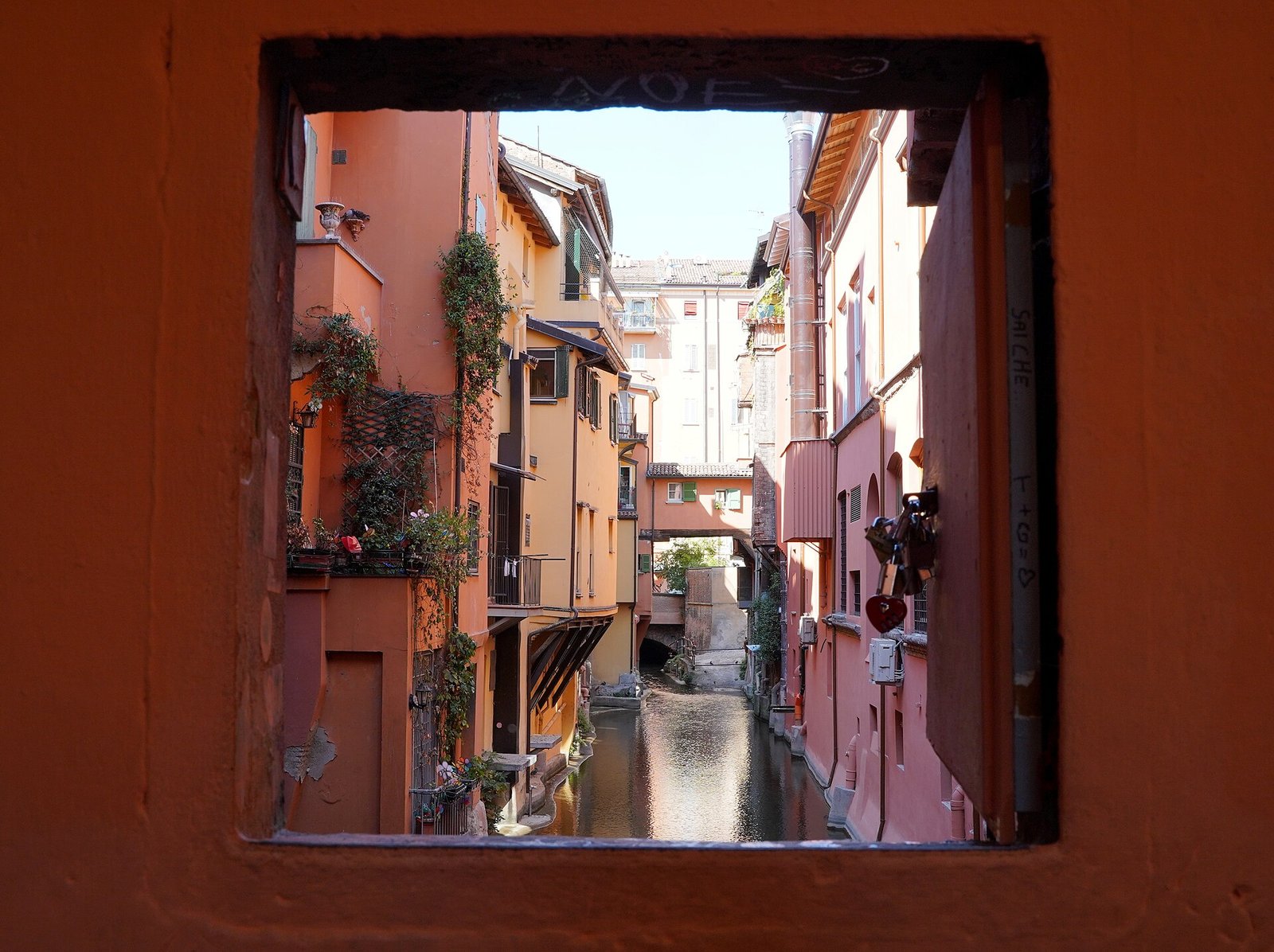
To walk off that generous lunch we head for via Piella, where a delightful surprise awaits: the famous finestrella, the little window. Open its small wooden shutter and a genuine “Piccola Venezia”, a Little Venice, opens up before your eyes, with the Canale delle Moline running hidden between the colourful houses: an urban scene that looks like a postcard from another age. This unique glimpse reveals an unsuspected side of the city, because Bologna was once criss-crossed by navigable canals, which were then covered over between the end of the nineteenth century and the twentieth.
The Santo Stefano complex: the Seven Churches
Leaving Little Venice behind, we plunge into the charm of via Santo Stefano. Walking under the shelter of the porticoes, a UNESCO World Heritage Site that makes every stroll in Bologna a uniquely sheltered experience, we come to one of the most mystical and evocative places in the city: the Santo Stefano complex, known to the people of Bologna as the “Sette Chiese”, the Seven Churches. The square here is dominated by an ancient tangle of sacred buildings, and stepping inside is like travelling back to the Middle Ages: a succession of cloisters, courtyards and chapels that fit into one another.
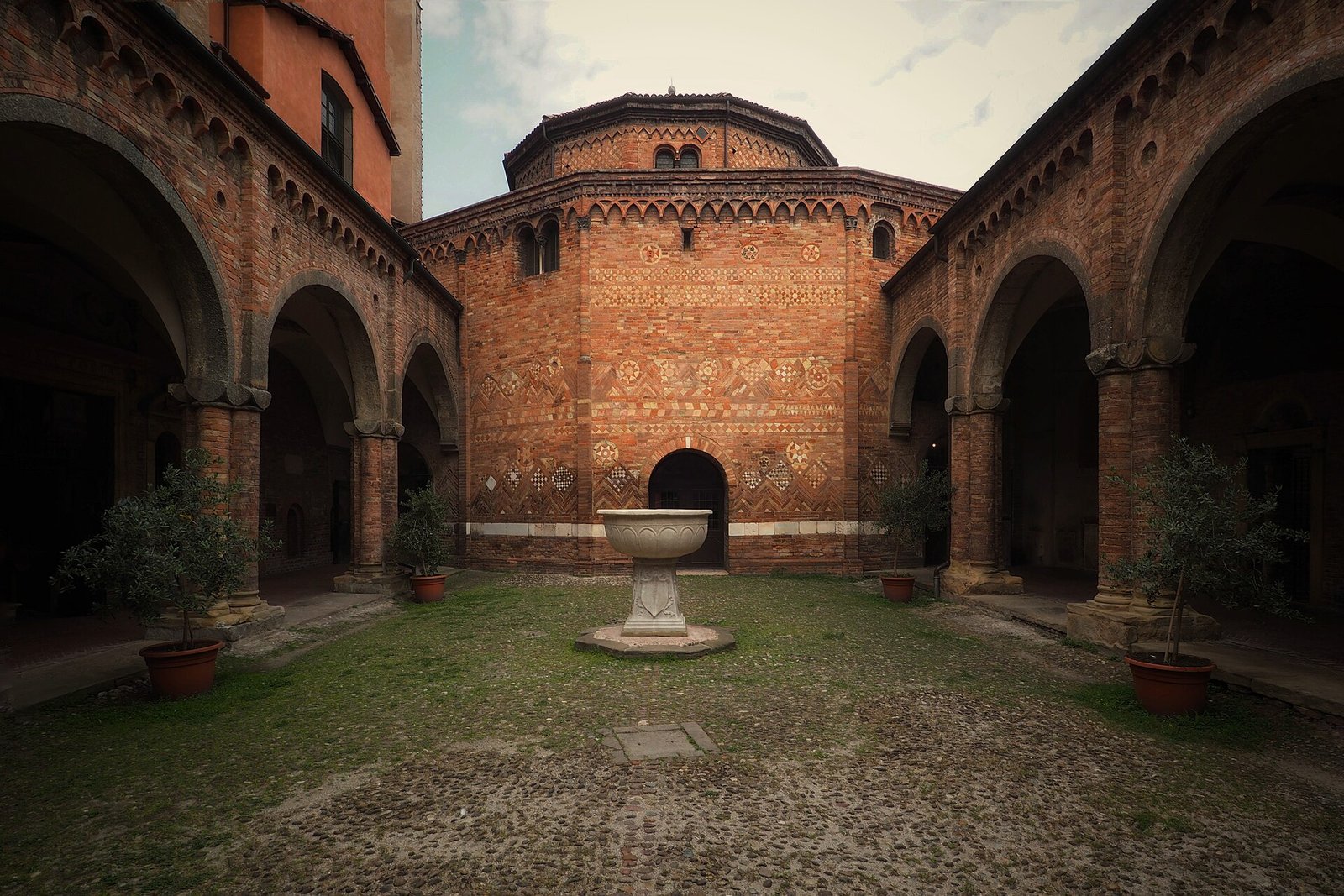
Do not miss the Church of the Crucifix, intimate and evocative with its raised presbytery; the Church of the Holy Sepulchre, the beating heart of the complex, with the shrine that recalls the Holy Sepulchre in Jerusalem; and the beautiful Courtyard of Pilate. This last is one of the most captivating corners of the entire complex, conceived to reproduce the stone courtyard in Jerusalem where Pontius Pilate condemned Jesus to death. At its centre stands the celebrated “Catino di Pilato”, Pilate’s Basin, a large limestone basin dating from the Lombard period, while high up among the columns of the portico you can spot the curious stone sculpture of a cockerel, a reminder of Saint Peter’s denial.
Read also: if you would like to stretch your trip beyond Bologna, discover the painted village of Dozza and its painted walls and all the events in Imola in 2026.
Where to stay near Bologna: come and see us at Podere Zampiera Vecchia
So, what do you say? Has this journey through the wonders of Bologna and the honest flavours of its kitchen won you over, at least a little? If you would like to carry on discovering this lovely corner of Italy beyond the city limits and to see the countryside around Imola, come and stay with us at Podere Zampiera Vecchia, about half an hour from Bologna: we would be delighted to host you in one of our rooms and to give you a stay to remember. Set within a certified organic farm, our agriturismo combines the warm welcome of home with the charm of the countryside.
Read also: if after Bologna you would like to stay at the table, here are the best restaurants in Imola, minutes from the farm.
Photo credits, images from Wikimedia Commons: Piazza Maggiore from above by Ingo Mehling, façade of San Petronio by Congolandia.g, Neptune Fountain by Lary3lary, the little window on via Piella by Donatella Bajo and tagliatelle al ragù by Petar Milošević (CC BY-SA 4.0); rooftops of Bologna by Ввласенко (CC BY-SA 3.0); Two Towers by Fred Romero and the Santo Stefano complex by Ștefan Jurcă (CC BY 2.0). Images resized from the originals.


